

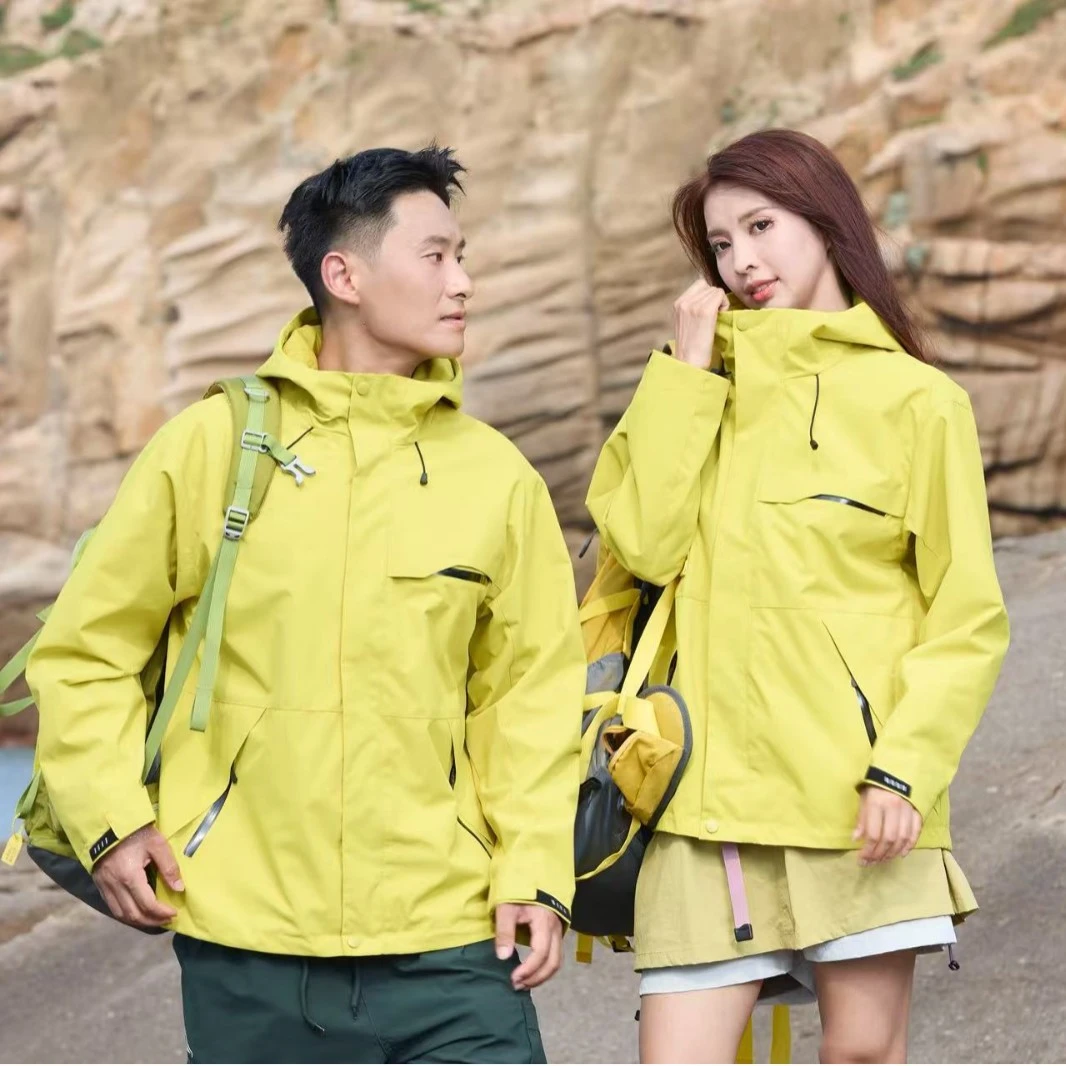
3‑in‑1 jackets are among the most popular multi‑functional outerwear for outdoor, hiking and daily casual markets. Featuring a detachable inner fleece or soft‑shell liner, this style delivers flexible warmth: wear the outer shell alone on rainy cool days, use the inner liner for mild weather, or combine both for cold, wet winter conditions. For global buyers, many hidden pitfalls lie in waterproof rating, hydrostatic‑head standards, seam‑sealing craftsmanship and customization options. Understanding these key metrics helps you avoid defective goods, customer complaints and unnecessary financial losses.
Waterproof rating is the top priority when sourcing 3‑in‑1 jackets, and hydrostatic head is the core measurable index. Hydrostatic head, measured in mmH₂O, indicates how much water pressure fabric can resist before liquid water penetrates. A rating of 5,000 mm handles light drizzle for everyday urban use. For regular hiking and outdoor activities, 8,000‑10,000 mm is the practical baseline. Professional‑grade products for heavy rain and harsh environments require 15,000 mm or higher.
Keep one critical fact in mind: a high hydrostatic‑head fabric does not automatically equal a fully waterproof jacket. Seam sealing decides real‑world rain‑proof performance. Every sewing stitch creates tiny needle holes, which become leak risks. Two common solutions are fully taped seams and critically taped seams. Fully taped seams apply waterproof hot‑melt tape over all stitch lines across the whole outer shell, which is non‑negotiable for outdoor‑oriented 3‑in‑1 jackets intended for rainy conditions. Critically taped seams only seal high‑stress areas such as shoulders, hoods and armholes to cut production costs, more suitable for light‑rain urban‑fashion‑focused items. Poor tape adhesion, wrong heating temperature or incomplete edge covering are frequent manufacturing defects that lead to water leakage, even with premium shell fabric.
When evaluating 3‑in‑1 jackets, do not overlook breathability. A shell with excellent hydrostatic head but low moisture‑vapor transmission will trap sweat inside, making wearers feel damp and uncomfortable during activity. For active‑use products, confirm MVTR performance alongside waterproof data. Also distinguish between the outer shell and inner liner: the detachable liner usually focuses on warmth instead of waterproofness. It is normal for fleece or soft‑shell liners to have no water‑resistant treatment.
Customization opens huge market possibilities for brand buyers, yet it requires clear specifications in your tech‑pack. Common custom items include fabric weight and color, waterproof‑performance targets, logo printing or embroidery, zipper and hardware selection, liner material choice, and tailored sizing charts. If you request custom seam‑sealing standards, clearly state whether you need fully taped or critical‑only taping. Remember that custom waterproof treatments and special taping settings will affect lead‑time and unit price. New artwork for logos will generate one‑time mould fees. Provide vector‑format files at the early sampling stage to prevent delays.
Quality‑control steps should cover material incoming checks, inline production monitoring and pre‑shipment final inspection. Verify fabric hydrostatic‑head lab reports before mass production. During production, inspect seam‑tape sticking conditions frequently. In final inspection, perform spray‑water leak testing on finished outer shells. Many professional buyers adopt AQL 2.5/4.0 standards for defect acceptance.
In conclusion, successful 3‑in‑1 jacket sourcing is more than checking appearance and price. Define your target‑user scenarios first, set reasonable hydrostatic‑head requirements, specify seam‑sealing standards clearly, and lock all custom details in documentation. Thorough sample confirmation before bulk order release will greatly reduce order risks and help you deliver reliable, market‑competitive 3‑in‑1 jackets to your customers.