

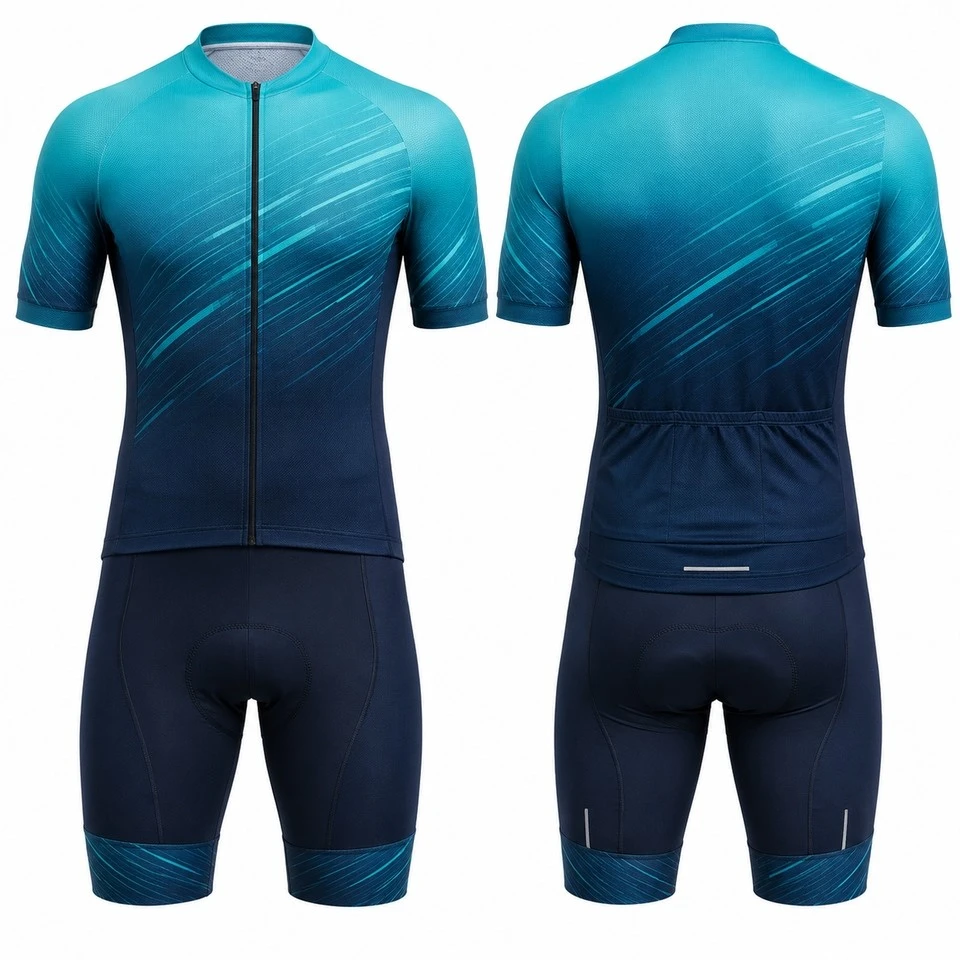
Unlike separate swim, bike and running clothes, a triathlon suit is engineered to perform continuously through swimming, cycling and running without garment changes. Understanding core fabric properties and design logic helps brands select qualified materials and optimize custom trisuit development.
Fabric selection is the foundation of any functional triathlon suit. The most widely adopted material is polyester-spandex blended fabric, usually 80%–88% polyester paired with 12%–20% spandex. Polyester delivers rapid moisture wicking and fast drying after open-water swimming, while spandex provides four-way stretch for unrestricted movement. High-quality trisuit fabric must resist chlorine and saltwater corrosion, avoid retaining excess water weight and maintain elasticity after repeated use. Pure cotton is never suitable, as it stays wet, causes chafing and slows athletes down.
Additional functional treatments are essential. UPF 50+ UV protection shields skin during long cycling and running segments. Anti-odor finishing reduces bacterial buildup from heavy sweating. Lightweight mesh panels are often placed at the back, underarms and sides to enhance ventilation in hot racing conditions.
Design details determine real race-day experience. First, the integrated triathlon chamois pad differs from regular cycling padding. It is thinner, designed to drain water quickly and avoid discomfort during running. Second, flatlock seams eliminate skin rubbing, a common pain point during long-distance races. Laser-cut cuffs and leg openings remove bulky elastic bands to prevent slipping and chafing. Front zippers allow easy temperature adjustment and simplify putting on suits after wetsuit removal in transitions.
Pocket layout deserves careful planning. Hidden back mesh pockets securely hold energy gels without bouncing during running. Overly large pockets increase drag and are rarely used by competitive athletes. Aerodynamic tailored cuts reduce wind resistance on bikes, while excessive tightness limits mobility for swimming and running, requiring designers to balance aerodynamics and comfort.