


For global motorcycle enthusiasts, cross-border buyers, and gear practitioners, motorcycle jackets are far more than ordinary fashion outerwear. They are professional protective gear integrating safety protection, technological functionality, outdoor adaptability, and trendy styling. With the popularization of global motorcycle culture and the booming demand for long-distance and casual riding, motorcycle jackets have expanded beyond track-only usage and become essential gear for commuting, cruising, off-roading, and vintage riding scenarios. This guide systematically breaks down professional industry knowledge, international standards, material differences, and product characteristics of motorcycle jackets, helping end users make informed purchases and enabling cross-border sellers to clarify core product competitiveness.
1. Core Differences Between Motorcycle Jackets & Regular Fashion Coats
Fashion-style motorcycle-inspired coats and professional riding motorcycle jackets belong to completely different product categories, representing the most critical industry distinction. Ordinary moto-style outerwear focuses solely on appearance and trendy silhouettes without professional protective structures. Their fabrics offer poor wear resistance and impact resistance, making them suitable only for daily casual wear. In contrast, professional motorcycle riding jackets are certified protective equipment designed specifically for riding safety scenarios. Equipped with anti-abrasion, impact-resistant, windproof, waterproof, and ergonomic stretch structures, they minimize physical injuries during falls, high-speed slides, and harsh outdoor conditions, serving as a vital part of the global riding safety system.
In terms of industry attributes, motorcycle jackets fall under the category of Personal Protective Equipment (PPE). Their production, testing, and export comply with universal international standards. Unlike ordinary casual apparel, functionality and safety are the primary assessment metrics for professional motorcycle gear.

2. Mainstream Materials & Industry Performance Differences
Materials determine the protection level, service life, comfort, and pricing of motorcycle jackets. Currently, three major material categories dominate the global market, tailored for different scenarios and consumer tiers:
1. Genuine Leather (High-end Standard)
Cowhide and kangaroo leather are the core materials for premium motorcycle jackets. Kangaroo leather boasts far superior tear resistance and compact texture compared to regular cowhide, delivering top-tier abrasion resistance during high-speed slides while ensuring excellent fitness and breathability. It is ideal for vintage cruising, long-distance touring, and professional track riding. Leather motorcycle jackets feature stylish silhouettes and premium texture, balancing reliable protection and trendy aesthetics, making them the mainstream choice for high-end consumers. Their drawbacks include relatively heavy weight, weak adaptability to rainy weather, and higher pricing.
2. High-strength Chemical Fabrics (Mass-market Mainstream)
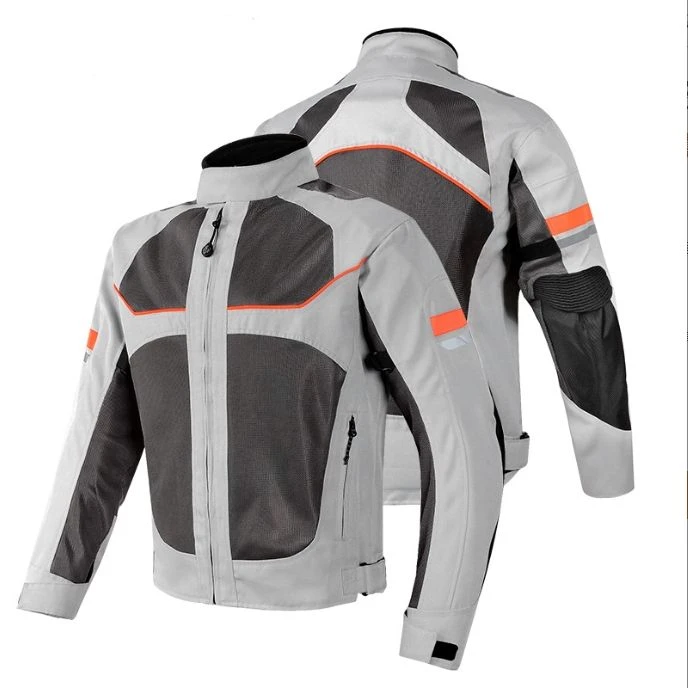
High-density Oxford cloth, nylon, and Dyneema high-performance fiber are the most widely used materials in the industry with the largest shipment volume. Composite fabrics blended with approximately 15% Dyneema fiber eliminate the traditional industry pain point of "bulky protective gear", achieving lightweight design with ultra-high tear and abrasion resistance. These fabrics support waterproof, windproof, and breathable membrane treatments, offering strong all-season adaptability and cost performance. They are extensively applied in commuting, daily riding, and long-distance touring motorcycle jackets, dominating cross-border best-selling product lines.
3. Lightweight Stretch Fabrics (Casual All-season Models)
Made of high-elastic breathable knitted fabrics, these jackets prioritize lightweight comfort and quick-dry performance with basic protection levels. Optimized for maximum movement flexibility during riding, they are perfect for high-temperature summer riding and short-distance urban commuting. Popular among entry-level and casual riders, they serve as cost-effective daily necessities in the market.