

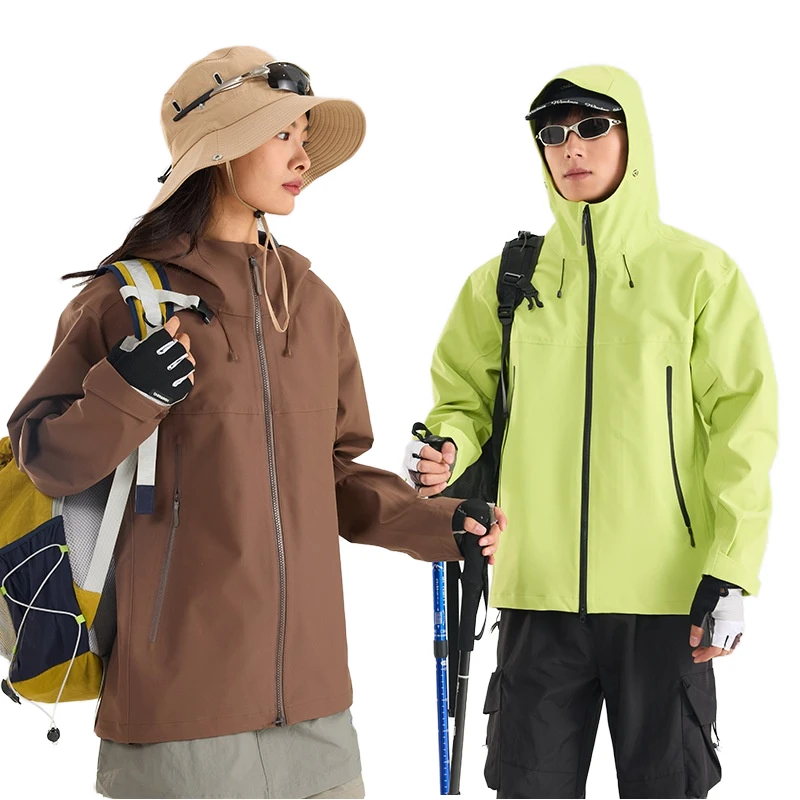
Waterproof outdoor jackets are essential products in many outdoor apparel collections.
From lightweight rain shells to technical hiking jackets, different products are designed to protect wearers from changing weather conditions while maintaining comfort and mobility.
For clothing brands and wholesale buyers, choosing the right waterproof jacket involves more than selecting a fabric that repels water.
Fabric technology, breathability, seam construction, garment design, and intended usage all influence the final product.
This guide explains the key factors to consider when developing or sourcing custom waterproof outdoor jackets.
1. Understand the Difference Between Water-Resistant and Waterproof
These two terms are often used together, but they do not mean the same thing.
Water-resistant jackets are designed to handle limited exposure to moisture, such as light rain or occasional splashes.
They may use tightly woven fabrics or water-repellent surface treatments.
Waterproof jackets are designed to provide stronger protection against water penetration, usually through a waterproof membrane or coating combined with suitable garment construction.
For outdoor brands, accurately defining the required level of protection is important when selecting materials and preparing product specifications.
A jacket intended for casual daily wear may require different protection from a technical shell designed for prolonged exposure to rain.
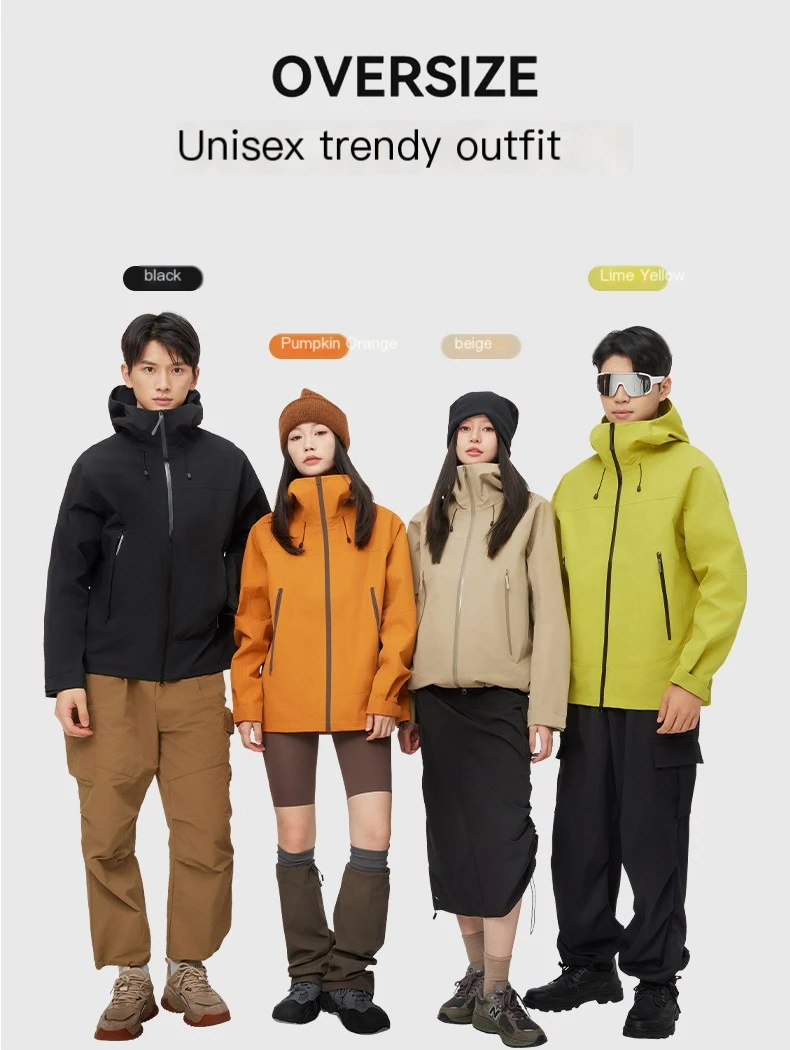
2. Choose the Right Waterproof Fabric Construction
Waterproof outdoor jackets commonly use several types of fabric construction.
Water-repellent fabric
A durable water repellent (DWR) finish helps water form droplets on the fabric surface rather than immediately soaking into it.
This treatment can be useful for lightweight outdoor jackets and shell garments.
However, DWR alone does not make a garment fully waterproof.
PU-coated fabric
Polyurethane (PU) coatings are commonly used to improve the water resistance of outdoor fabrics.
They can provide a practical solution for rainwear and jackets developed for different price ranges.
Membrane-laminated fabric
A waterproof membrane can be bonded to a face fabric to create a technical waterproof construction.
Depending on the design, the fabric may use a two-layer, 2.5-layer, or three-layer structure.
These constructions offer different balances of protection, weight, comfort, and durability.
3. Why Breathability Matters
A waterproof jacket must help prevent external rain from entering, but it should also help manage moisture generated by the wearer.
During hiking and other physical activities, the body produces sweat and heat.
If moisture cannot escape efficiently, the inside of the jacket may feel damp and uncomfortable.
Breathability is therefore an important consideration when developing technical outdoor clothing.
For high-activity applications, brands may need to consider more breathable membrane technologies, suitable ventilation features, and lightweight construction.
For casual rainwear, a different balance between cost, protection, and breathability may be appropriate.
4. Understand Waterproof Ratings and Testing
Waterproof performance is commonly evaluated using hydrostatic pressure testing.
A hydrostatic head measurement indicates how much water pressure a fabric can withstand before water penetrates it under the specified test method.
However, brands should not compare numbers without considering the testing standard and conditions.
It is also important to distinguish fabric-level performance from finished-garment performance.
A fabric may meet a particular waterproof specification, but the finished jacket can still leak through seams, zippers, or poorly designed openings.
When sourcing waterproof jackets, buyers should ask manufacturers for relevant test information and clearly define the required performance standards.
5. Seam Sealing Is Essential
Seams are potential entry points for water.
For jackets intended to provide reliable waterproof protection, seam sealing can play an important role.
Common approaches include:
Critical seam taping.
Fully seam-sealed construction.
Waterproof zipper systems.
Storm flaps over zipper openings.
The appropriate solution depends on the garment's intended application and performance requirements.
For example, a lightweight everyday rain jacket may have different construction requirements from a technical hiking shell.
6. Match the Jacket to the Weather Conditions
Different weather conditions require different product specifications.
|
Weather and application |
Suggested jacket direction |
|---|---|
|
Light rain and daily use |
Lightweight water-resistant jacket |
|
Regular outdoor hiking |
Waterproof breathable shell |
|
Cold and wet weather |
Insulated waterproof jacket |
|
Windy conditions |
Windproof shell jacket |
|
High-activity outdoor sports |
Lightweight breathable technical shell |
These are general product-development directions rather than fixed performance standards.
The final design should consider climate, activity level, layering requirements, and target price.
7. Other Design Details to Consider
A well-developed waterproof jacket combines fabric performance with practical design.
Important features include:
Adjustable hood: Helps improve coverage and fit in changing weather.
Cuff construction: Adjustable cuffs help reduce water and wind entry.
Hem adjustment: Drawcords can help create a closer fit and improve protection.
Pocket placement: Pocket design should balance storage, accessibility, and weather protection.
Zipper selection: Standard, water-resistant, or waterproof zipper options can be selected according to product requirements.
Lining and interior construction: These influence comfort, weight, and how the garment feels during use.
8. What Brands Should Check Before Bulk Production
Before placing a bulk order for custom waterproof jackets, brands should confirm:
Fabric composition and construction.
Waterproof and breathability test requirements.
Seam-sealing specifications.
Zipper and trim selection.
Garment measurements and fit.
Logo and labeling requirements.
Sample approval and quality inspection criteria.
A development sample allows the brand and manufacturer to review the actual garment before production begins.
This is particularly important for technical outerwear, where small construction changes can affect product performance.
9. Custom Waterproof Jacket Manufacturing with Crownway
Crownway specializes in custom sportswear and outdoor apparel manufacturing.
Our product direction includes waterproof jackets, hiking clothing, outdoor shells, insulated jackets, and other performance-oriented garments.
For brands developing private-label outdoor collections, customization can involve fabric selection, colors, garment construction, logo application, labels, and packaging.
The best development approach begins with a clear understanding of the target market and intended product use.
By confirming technical requirements and reviewing samples before bulk manufacturing, brands can build more consistent outdoor apparel collections.