

For international clothing brands and procurement purchasers sourcing apparel from Asian manufacturers, factory audits are no longer optional add-ons but mandatory prerequisites for market access. BSCI social compliance audit and ISO9001 quality management certification stand as two most widely recognized global standards. BSCI focuses on ethical labor conditions and corporate social responsibility, while ISO9001 systematizes full-cycle production quality control. Together they resolve buyers' two biggest concerns: ethical supply chain risks and unstable garment quality. For overseas buyers, verified audit credentials greatly simplify supplier screening, reduce cross-border cooperation risks, and lay a solid foundation for long-term bulk orders.

1. Social Compliance Audits in European & American Markets
European and North American retailers enforce strict social compliance regulations to eliminate sweatshop labor, unsafe workshops and unfair working hours within their supply chains, with BSCI being the dominant benchmark across Europe. Initiated by Amfori, BSCI audits thoroughly inspect factory working hours, minimum wage payment, occupational health & safety, workplace environment, child labor prohibition, welfare provisions and environmental protection measures.
EU supermarkets, fashion chains and outdoor wear brands will not place formal orders unless their garment suppliers pass BSCI assessment. Without valid BSCI certification, goods may face customs detention, market sales bans or public reputation crises triggered by labor exposure scandals. Compared with scattered brand-specific social audits, unified BSCI certification allows factories to serve multiple European clients simultaneously and cuts repeated audit costs for both sides. Meanwhile, American markets adopt comparable standards such as WRAP and SEA, yet BSCI still acts as a widely accepted credential for brands covering both EU and US territories, helping buyers unify social requirement standards across global procurement networks.
2. ISO9001 Quality Management in Garment Manufacturing
If BSCI governs the human side of production, ISO9001 sets the systematic framework for stable garment quality throughout the entire manufacturing chain. Unlike random spot checks on finished clothes, ISO9001 builds standardized procedures covering incoming fabric inspection, cutting, sewing, accessory fitting, washing, finishing, final inspection and shipment.
In apparel production, many quality defects-uneven stitching, fabric color deviation, size inconsistency, faulty zipper installation and loose seam taping-stem from disordered workflow rather than individual worker errors. ISO9001 mandates documented operating specifications, batch record archiving, nonconforming product disposal rules and continuous quality improvement mechanisms. Every production step is traceable; when quality issues emerge, suppliers can quickly locate problematic stages and implement corrections. For global buyers, this certification guarantees consistent quality between pre-production samples and mass production, drastically lowering return rates, after-sales disputes and losses caused by defective bulk goods. It is especially vital for large seasonal orders of parkas, sportswear and uniforms that demand uniform specifications.
3. Crownway Production Audits & Standards
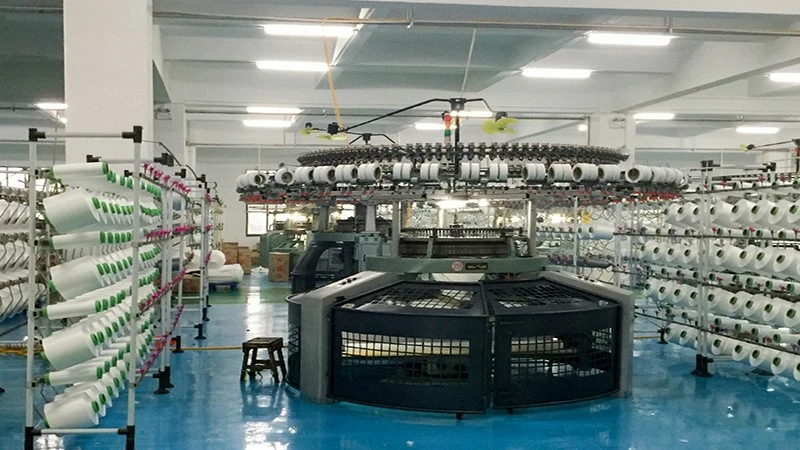
As a professional garment manufacturer serving global apparel buyers, Crownway integrates BSCI social compliance and ISO9001 quality management into daily factory operation, passing regular third-party audits to deliver dual-assurance supply chain solutions for clients.
On social compliance, Crownway strictly complies with BSCI codes: standardized working schedules, legal overtime arrangements, complete social insurance benefits, well-ventilated workshops with fire safety facilities, and regular occupational safety training. We welcome clients or designated third-party institutions to conduct unannounced BSCI audits anytime, fully avoiding labor compliance risks for European and American purchasers.
In terms of quality management, our whole factory runs under ISO9001 protocols. We establish dedicated teams for fabric testing, pattern grading, semi-finished inspection and finished goods verification; waterproof, warmth retention and tensile tests for functional outerwear are completed in our in-house lab before shipment. All production data is archived for batch tracing.
