

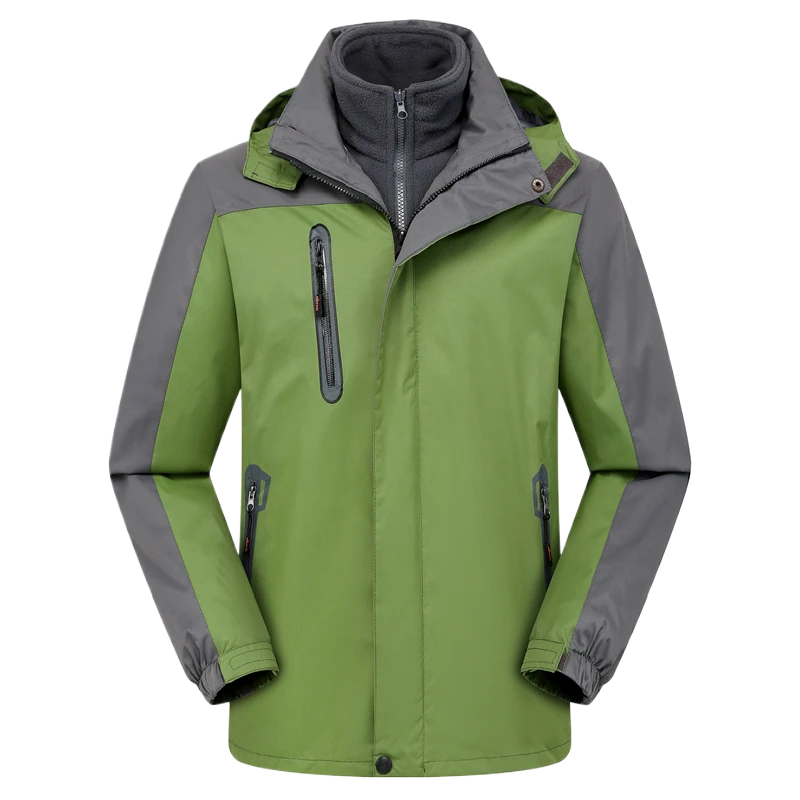
3-in-1 interchange system jackets are one of the most profitable and versatile items for outdoor apparel brands. Featuring a detachable inner liner and a protective outer shell, they deliver three wearing modes: standalone shell, standalone liner, and fully combined jacket. For B2B buyers, importers, and brand owners, sourcing reliable 3-in-1 jackets requires strict technical and commercial checks. To avoid defective assembly, inconsistent branding, and unnecessary bulk-order costs, follow this complete sourcing checklist focused on zipper compatibility, dual-branding flexibility, and high-volume cost optimization.
1. Zipper Compatibility Between Shell and Liner
The interchange zipper system is the core functional structure of a qualified 3-in-1 jacket. Many low-quality supplier failures happen not in fabric performance, but in mismatched zipper sizes, inaccurate positioning, and poor slider smoothness. When sourcing, always verify full compatibility between the outer shell and inner liner zippers. Both sets must adopt unified specifications, including zipper model, tooth width, slider type, and stitching allowance, to ensure seamless assembly and detachment.
Reliable manufacturers apply standardized production positioning, preventing common issues such as jamming, misalignment, loose connection, or liner sagging after repeated use. Request sample testing for hundreds of open-close cycles to confirm durability. Consistent zipper compatibility guarantees stable product quality, reduces after-sales complaints, and maintains your brand's professional outdoor performance positioning.

2. Dual-Branding Options for Outer & Inner Garments
Custom branding is essential for differentiated retail and corporate uniform orders. A key advantage of 3-in-1 jacket structures is independent customization space for the outer shell and inner liner. Professional suppliers support dual-branding solutions, allowing separate logo printing, embroidery, or heat-transfer labeling on the exterior shell and interior liner according to your brand requirements.
This dual-branding flexibility greatly enhances product tiering and market value. For retail brands, you can print the main brand logo on the outer shell and place a subtle icon or slogan on the liner. For corporate and team orders, you can match client logos on the outside and company culture marks on the inside. Confirm with your supplier all available techniques, position options, and color matching standards before bulk production to ensure unified brand presentation across all wearable modes.
3. Cost Optimization for High-Volume Orders
Large-volume 3-in-1 jacket orders require systematic cost control without sacrificing quality standards. Unlike single-layer jackets, 3-in-1 styles involve double fabrics, double stitching, dual zipper systems, and dual branding processes, which easily cause cost waste if production management is immature. Professional manufacturers optimize costs through standardized material batching, streamlined assembly lines, and integrated accessory sourcing.
Effective high-volume optimization includes unified bulk fabric procurement, standardized zipper accessory matching, fixed-position assembly workflows, and rational labor allocation. These measures reduce material loss, shorten production cycles, and stabilize unit prices for repeated orders. For brand buyers, this means stable profit margins, predictable delivery schedules, and scalable seasonal order expansion.
Final sourcing takeaway: Qualified 3-in-1 jackets depend on compatible zipper systems, flexible dual-branding support, and mature high-volume cost control. Working with a supplier that masters these three core capabilities ensures consistent quality, customizable branding, and cost-effective bulk production for your long-term outdoor apparel business.